Ceramic vs. Carbon vs. Dyed Window Tint: Which One Is Right for Your Car?
Hot seats and a blazing dashboard tell you fast that not all window tint works the same. Cheap dyed film blocks glare, but a lot of heat still gets through. Premium ceramic film can cut cabin heat by a wide margin. Our own ceramic film blocks up to 83 percent of infrared heat.
At Vinyl Mafia, we hear this alot. Drivers assume any tint will fix the heat, then feel the real difference once ceramic goes on. This guide breaks down ceramic vs carbon vs dyed window tint in plain terms. You will know what you are paying for before you sit in the chair.
We will cover what each film is actually made of. Then we will compare performance side by side, and help you match one to your car and budget. If you're looking for more service specifications, see our vehicle window tinting service.
What's the Difference Between Ceramic, Carbon, and Dyed Window Tint?
- Dyed window tint is the most affordable option. It blocks light and glare well, but has the weakest heat rejection and tends to fade with age.
- Carbon window tint rejects more heat than dyed film. It does not fade, and gives your windows a deeper, matte look.
- Ceramic window tint blocks the most heat and UV rays. It does not interfere with phone or GPS signals, and costs the most of the three.
Understanding Window Tint Types (Ceramic, Carbon, and Dyed)
Dyed tint uses a layer of dye between two liners. It blocks light and glare at a low cost, but it is the most basic option on the market.
Carbon tint uses carbon particles instead of dye. It rejects more heat than dyed film and will not interfere with metal-based signals like radio or GPS.
Ceramic tint uses ceramic particles, which are non-metallic and non-conductive. It gives you the strongest heat and UV rejection of the three, with zero signal interference.
From across the parking lot, these three films can look almost the same. The real differences show up in how your car feels on a hot day. They do not show in how the glass looks from outside.
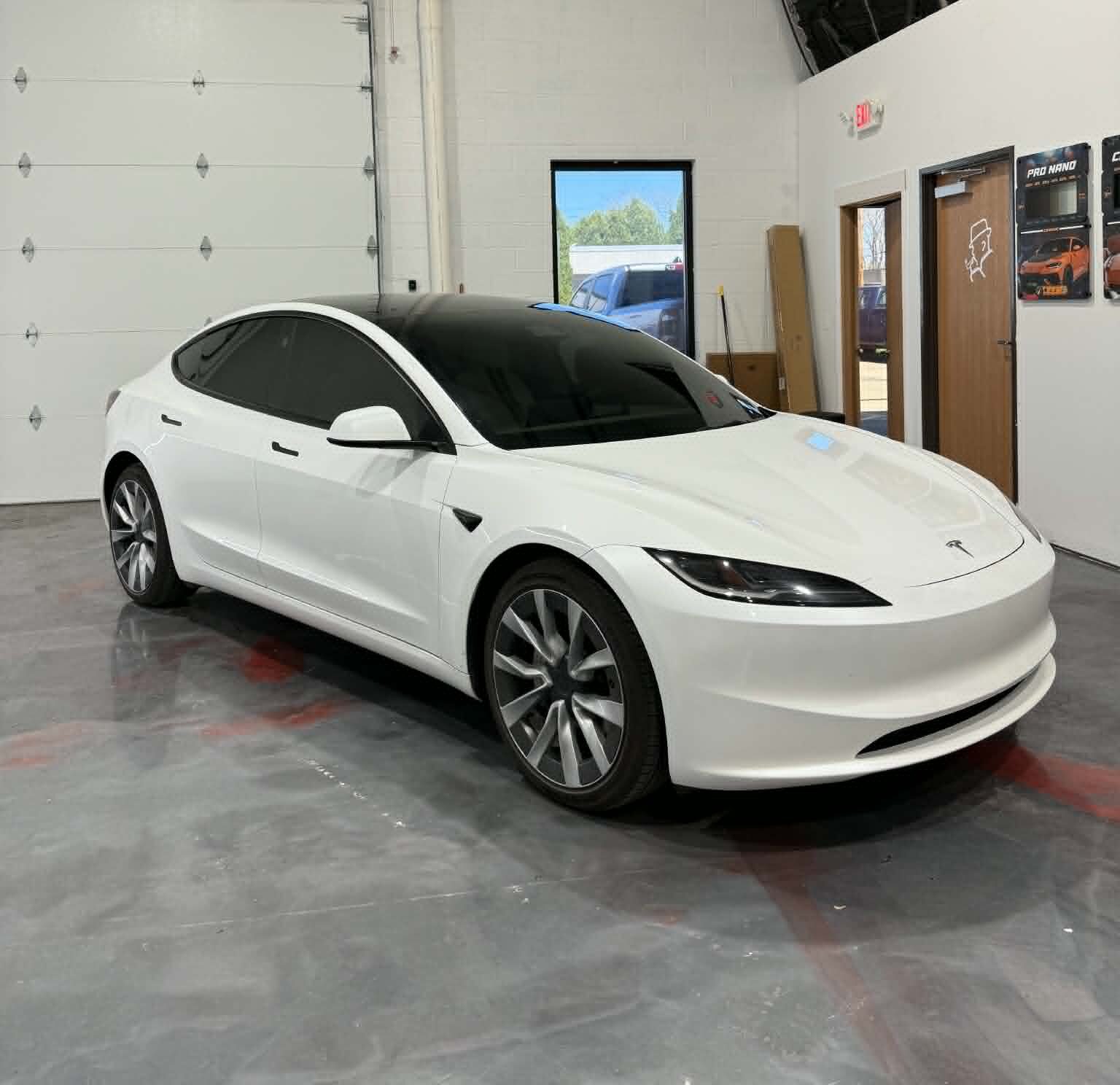
In our install bay, ceramic is the film our techs recommend most for daily drivers in Michigan. We install Geoshield film on every job: the C2 Carbon and Pro Nano Ceramic lines, backed by a lifetime warranty.
Choosing the Right Tint for Your Car
Picking between these three tint films comes down to how you drive and what you want out of your car. Use this car window tint comparison as a quick gut check for your situation.
If you commute daily in a hot car, ceramic tint is worth the extra cost. It keeps your cabin cooler over long drives in the sun.
If you are on a tight budget and live somewhere mild, dyed tint gets the job done. It blocks glare and gives you privacy at the lowest price point.
If you want a middle ground that fits most cars and most budgets, carbon tint is a strong pick. It beats dyed film on heat rejection without the ceramic price tag.
Michigan tint law also plays a role in your choice. Front side windows must allow more light through than back windows. Exact limits can change, so ask your installer about current legal darkness levels before you decide.
Quality tint also holds its value. A car with clean, bubble-free tint tends to show better at trade-in or resale than one with tint stripped off.
Comparing Performance Factors
Numbers help when you are comparing tint films side by side. Here is how our carbon and ceramic film perform, based on the specs for the Geoshield film we install. These are our numbers, and other brands can perform differently.
Dyed Film
- Infrared rejection: Lower, blocks the least heat of the three
- Total heat rejection (TSER): Lower, generally under 40%
- UV protection: About 99%
- Glare reduction: Good
- Fade resistance: Fades over a few years
- Signal interference: Can affect radio/GPS on older films
Carbon (Geoshield C2 Carbon)
- Infrared rejection: 34-83%
- Total heat rejection (TSER): 33-65%
- UV protection: 99%
- Glare reduction: Good
- Fade resistance: Color-stable, will not fade or purple
- Signal interference: None
Ceramic (Geoshield Pro Nano Ceramic)
- Infrared rejection: 76-83%
- Total heat rejection (TSER): 49-66%
- UV protection: 99%
- Glare reduction: Good
- Fade resistance: Color-stable, holds its finish
- Signal interference: None
Glare reduction is one factor where dyed and carbon film perform close to the same. Where they pull apart is heat and how long the film lasts.
The price jump from carbon to ceramic is worth weighing against comfort. We cover that trade-off in a companion guide on whether ceramic tint is worth the extra cost.
Aesthetic and Lifestyle Considerations
Looks matter just as much as performance for a lot of drivers. Dyed tint often looks flat and can turn grayish over time. Carbon tint gives you a deeper, non-reflective black.
Ceramic tint looks close to carbon at a glance, but many drivers notice a bit more clarity looking out. Beyond looks, tint also protects your dash and seats from sun fading over the years.
Alot of drivers ask "Is carbon tint darker than ceramic?", and simply put: No. Darkness level is chosen separately from film type, so carbon and ceramic can be installed at the exact same shade. The real difference between them is heat and UV performance, not how dark the glass looks.
Which Tint Blocks the Most Heat? (The Infrared Battle)
Heat and glare are not the same thing, even though people often mix them up. Visible light rejection controls glare, while infrared (IR) rejection controls how much heat actually reaches your skin and dashboard.
Our Geoshield ceramic film blocks 76 to 83 percent of infrared heat. Our Geoshield carbon film blocks 34 to 83 percent, depending on shade. Dyed film blocks the least of the three. These are our numbers, and other brands can vary.
You can see this play out on your dashboard and steering wheel. A car with quality ceramic tint often stays noticeably cooler to the touch. This holds true even when both cars sit parked in the same spot.
Infrared thermometer checks comparing different tint types usually show the same pattern: ceramic films produce the lowest surface temperatures, carbon lands in the middle, and dyed films run the hottest.
The Verdict: Which One Should You Choose?
If you are working with a tight budget, dyed tint gets you glare control and privacy for the lowest cost. If you want a solid middle ground, carbon tint gives you strong heat rejection without the top price tag. If heat and long-term performance matter most, ceramic tint is the strongest choice on the market.
Your installer can help you match the right film to your car and your climate. At Vinyl Mafia, we walk you through each option before any work begins, so you know what you are getting.
Want a deeper breakdown of ceramic tint costs versus its value? We cover that in a companion guide on whether ceramic tint is worth the extra cost.
Ready to get started? Contact Vinyl Mafia today for a free tint quote in Fraser, Michigan.