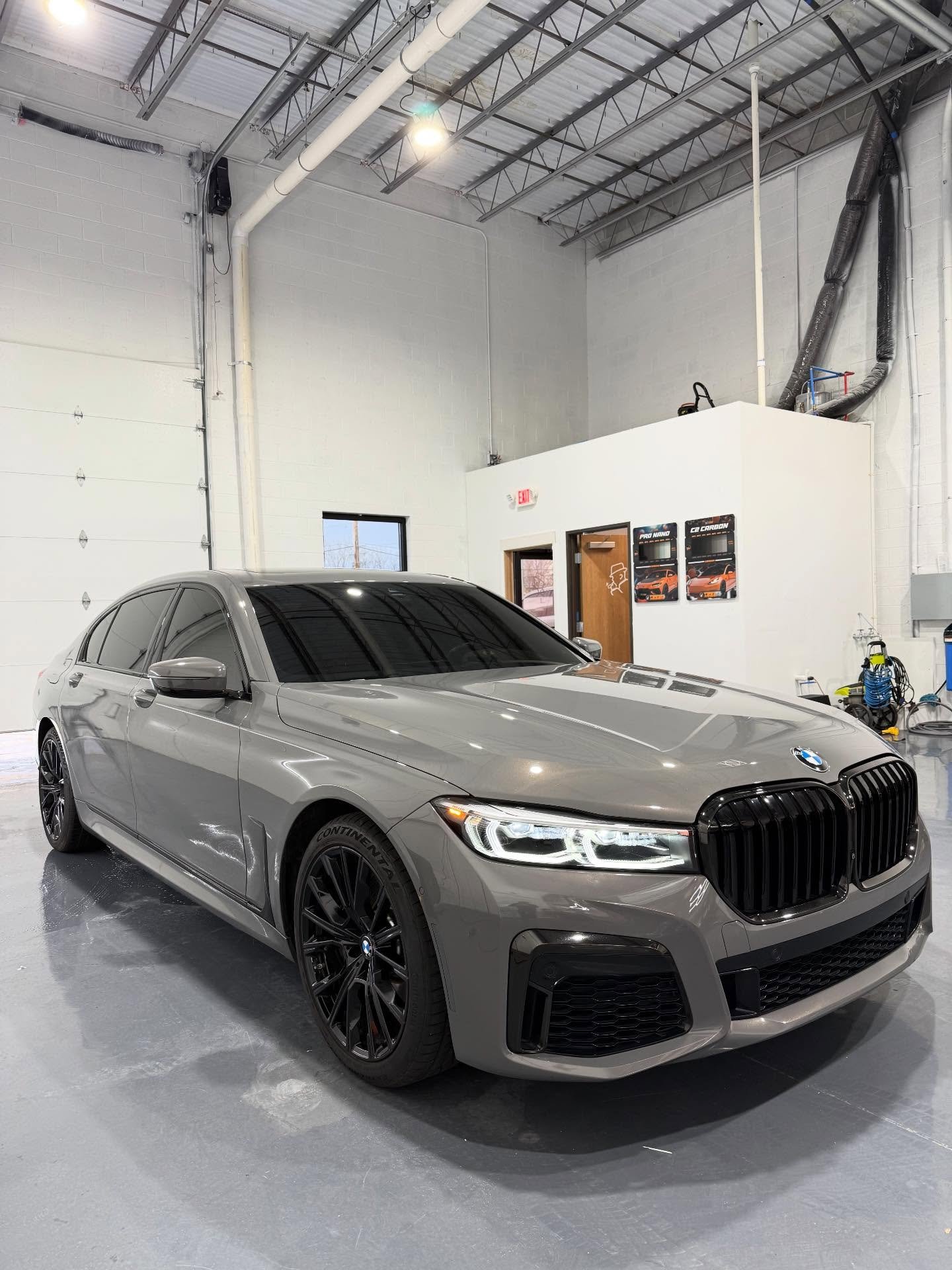
What Does Paint Correction Actually Do? (2026 Guide)
What Paint Correction Does to Your Car's Clear Coat
Quick Summary: Paint correction works on the clear coat, not the paint color underneath. A trained tech uses machine polishers and cutting compounds to shave down a thin layer of clear coat until light scratches, swirls, and haze disappear, leveling the surface without removing more than a few microns of material.
Here's the thing most people get wrong: paint correction isn't really about the paint at all, it's about the clear coat sitting on top of it. Every car built in the last few decades has a layer of clear, protective coating over the color, and that clear coat is what gets scratched when someone drags a dirty rag across your hood or a drive-thru brush scrubs your doors.
Those swirl marks you see under sunlight are just tiny scratches sitting in that clear layer, and correction removes them by leveling the surface around them rather than filling them in with wax or sealant. When we take on paint correction in Fraser, we tell clients the same thing: waxing hides swirls for a little while, but correction actually gets rid of them.
So how does that leveling happen? It comes down to abrasion, controlled and measured:
- A tech inspects the paint under bright light to map out scratches, swirls, and etching
- A cutting compound goes on with a machine polisher, using a pad matched to the paint's condition
- The machine works the compound across the surface, gently removing a microscopic layer of clear coat
- A finer polish follows to refine the finish and bring the gloss back
- The car gets wiped down and checked again under the same lighting to confirm the marks are gone
That's the short version, but in practice it takes real skill to know how much pressure to use, which pad pairs with which compound, and when to stop. Go too far and you thin the clear coat more than you need to; stop too early and the swirls stay, which is why machine experience matters far more than the products themselves.
We've worked on plenty of cars from all across Macomb County, that came in with heavy swirling from years of automatic car washes, especially trucks and SUVs that get used hard through Michigan winters. Road salt and grit act like sandpaper over time¹, so by spring a lot of owners are shocked at how dull their paint looks, and correction is what brings that gloss back before summer driving season and before a ceramic coating or paint protection film goes on.
One thing worth knowing is that correction doesn't add material to your car, it removes it, carefully, which is exactly why it's not something you want done over and over every few months. A good correction, done once and protected afterward, holds up for a long time, and seeing your paint under proper lighting is usually the moment it clicks for people.
Paint Correction vs. Polishing and Waxing: Where the Confusion Comes From
This is where most people get tripped up, and we don't blame them, because a lot of detail shops toss around words like polish, wax, and correction as if they're all the same thing. They're not, and that mix-up leads to plenty of Michigan drivers paying for one service while thinking they got another.
Waxing is the simplest of the three, a protective layer applied on top of your paint like a coat of sealant. It adds shine and a bit of short-term protection, but it does nothing to fix what's underneath, so if your paint has swirl marks or light scratches, wax just makes them look glossy instead of removing them.
Polishing is a step up, using light abrasives to clean the surface and knock down some very minor imperfections, but most one-step polishes barely touch real swirl marks or oxidation. You may have heard about this before, where someone gets a polish thinking it's the same as correction, then wonders why their car still looks hazy under sunlight a week later.
Paint correction is a different process entirely, neither a coating nor a quick buff, but a multi-stage job that uses machine polishers and different grades of compound to remove a thin layer of clear coat where the damage sits. That's the part people miss: correction physically levels the paint instead of covering up the problem.
- Wax: adds shine and short-term protection, but doesn't fix damage
- Polish: light abrasive cleaning that may reduce very minor haze
- Paint correction: a multi-stage process that removes swirls, light scratches, and oxidation from the clear coat
- Only correction changes what you actually see under direct light
Here's a scenario that is very likely to have happened to our previous customers. They bring in a car that's been waxed every few months for years, and it looks decent in the garage, but the moment they park it outside on a sunny afternoon near Utica or Clinton Township, every swirl mark shows up like a spiderweb. That's when it clicks that wax was never going to fix the problem, and correction was always the answer.
So how do you know which one your car needs? A quick way to think about it: if you can feel or see scratches with your fingernail (without causing additional scratches) catching a groove, wax and polish alone won't cut it, while paint that just looks a little dull but is otherwise smooth might only need a polish. If you'd rather not guess, our team can take a look and tell you exactly what your paint needs, which is the safest way to avoid paying for the wrong service twice.
One-Step vs. Two-Step Correction: Why More Isn't Always Better
A lot of people assume more steps always means a better result, but that's not really true, since a one-step and a two-step correction solve different problems, and picking the wrong one wastes time and money.
A one-step correction uses a single polishing stage to knock down light swirls, minor oxidation, and the hazy look you get from regular washing over a year or two. It's a lighter touch, where we're not removing deep paint but refining the top layer to bring back gloss and clarity.
A two-step correction goes further, starting with a compounding stage to cut through heavier defects like deeper scratches, water spots that etched into the clear coat, or swirl marks built up over several years, then following with a polishing stage to refine the finish and bring back that deep reflection.
So how do you know which one your car needs? Think about how the paint looks in direct sunlight:
- Light haze or fine swirls only visible up close: usually a one-step job
- Noticeable light scratches you can feel with a fingernail or see from a few feet away: likely a two-step
- Water spots from sprinklers or rain that left etching: often need two-step to fully remove
- Paint that still has good depth and just needs freshening: one-step is usually enough
- Older paint with years of neglect or improper washing: two-step gives a more complete result
The video above shows a Mazda that we put through a full two-step correction, and the results were the kind you really have to see up close to believe. Once the clear coat was leveled, we protected the finish for years to come with a Feynlab ceramic coating. That car earned the two-step, because the light scratches and swirl marks sat too deep for a single polishing pass to clear.
On the flip side, plenty of cars don't need that much work. If car owners come in asking for the full two-step when their paint only called for a one-step, since the swirling was light and mostly sitting on the surface, then we obviously wouldn't recommend a two-step. When the defects are shallow like that, a single polishing stage brings the gloss right back without removing more clear coat than necessary, and pushing past what the paint needs just wears that layer down for no reason.
As mentioned before, Michigan winters play a role here too, since road salt, slush, and freeze-thaw cycles are hard on clear coats, so cars that sit outside through winter often need a deeper correction come spring, while garage-kept vehicles usually get by with less. There's no universal answer, it comes down to your paint's actual condition rather than what sounds more thorough, and the real move is getting your paint looked at in person under the right light so you're not guessing.
If you’re trying to figure out what level of correction your vehicle actually needs, our guide on how much paint correction costs makes it easy to understand one‑step vs. two‑step pricing based on real defect severity.
Frequently Asked Questions
How do I know if my car needs paint correction?
You likely need paint correction if you can see swirl marks or haze under direct sunlight, or feel scratches catching your fingernail. Cars washed often at automatic car washes tend to show it first, and Macomb County drivers usually notice it after winter, once road salt and grit have dulled the clear coat. If wax makes your paint shinier but the marks are still there, that's a sign correction is what you need instead, and a quick inspection under bright light can confirm it.
Can I do paint correction myself instead of hiring a pro?
You can try, but it's risky without training on machine polishers and compounds, since a tech knows how much pressure to use and when to stop so the clear coat isn't thinned too much. Too much abrasion can damage paint permanently, and that's expensive to fix, so if you want a safe result without guessing on technique, having a professional check your paint first is the smarter move before you touch it yourself.
Is paint correction the same as buffing out a scratch?
No, buffing usually means a quick single pass to smooth one spot, while paint correction is a multi-stage process across the whole car. Correction maps out swirls, scratches, and oxidation first, then works through compound and polish stages to level the clear coat evenly, where buffing alone often misses deeper marks or leaves gloss looking uneven. If your whole car looks hazy, not just one panel, correction is the better fit.
Does Michigan winter weather make paint correction more necessary?
Yes, road salt and grit act like sandpaper on your clear coat through Michigan winters, so by spring many owners notice their paint looks dull or scratched from months of exposure. That buildup is why paint correction is often done before summer driving season, right before applying a ceramic coating or paint protection film, and catching it early keeps the damage from getting worse with repeated washes.
Will paint correction remove deep scratches completely?
Not always. Paint correction removes swirls, light scratches, and oxidation sitting in the clear coat, but deep scratches that reach the color coat may still show a faint line, since the process levels the surface around the damage instead of filling it in. If you're unsure how deep your scratches go, a proper inspection under bright light will tell you what correction can realistically fix.
How often should paint correction be done on the same car?
Not often. Paint correction removes a microscopic layer of clear coat each time, so doing it every few months wears that layer down faster than it should, while a good correction done once and followed by proper protection holds up for a long time. If you're comparing wax touch-ups against a full correction, our paint correction service page explains how the process and results differ over time.