How much does ceramic coating cost?
What Factors Change Ceramic Coating Cost
Here's the part most people miss. You're not really paying for the bottle of coating. You're paying for the hours that happen before a single drop touches your paint.
Think about it this way. A coating is clear and thin. It locks in whatever it's sitting on top of. So if your clear coat has swirl marks from an automatic car wash, those swirls get sealed under the coating and they're there for years. That's why prep matters so much, and that's where the hours go.
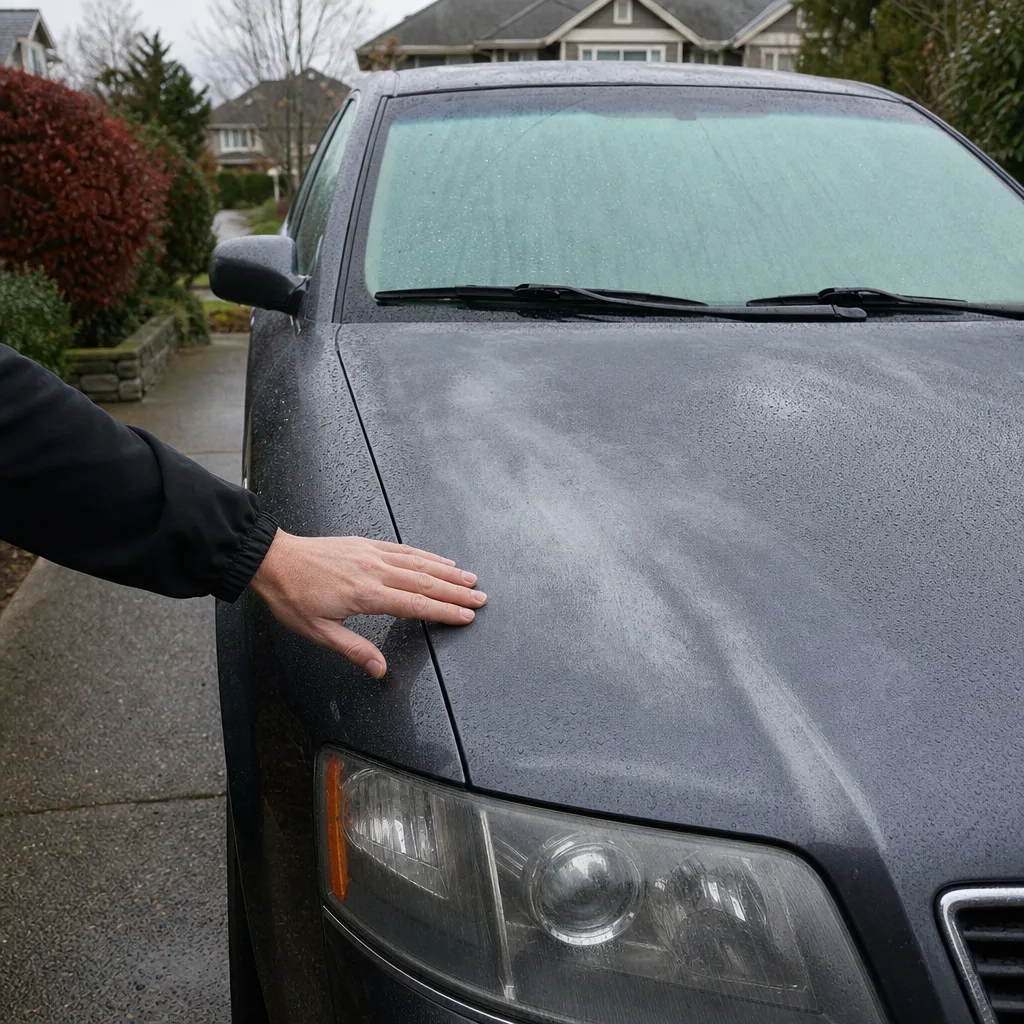
We see this every spring in Fraser and around Macomb County. A car comes in after a Michigan winter, covered in road salt film and water spots from six months of slush. The owner assumes it's just dirty. Under the shop lights it's a different story: the clear coat is etched and hazy, and it needs real correction before anything goes on top.
- Paint condition. Swirls, etching, and oxidation all add correction time, and correction time is the single biggest cost driver.
- Vehicle size. A compact sedan has far less surface area than a three-row SUV or a pickup, and that difference shows up in labor hours.
- Prep intensity. Decontamination, clay bar treatment, and water spot removal are separate steps, not freebies bundled into a quick wash.
- Coverage scope. Paint only versus paint plus wheels, glass, and trim changes the job substantially.
- Number of layers. More layers means more cure time and more shop time tied up on your car.
- Existing coatings or sealants. Anything already on the paint has to come off first, and that's added work.
Color plays a role too, and people are always surprised by this one. Black and dark blue cars show every imperfection under inspection lighting. Silver hides a lot. Same coating, same shop, but a black car usually needs more polishing passes to look right, and that's real time on the clock.
Then there's paint hardness. Some manufacturers run soft clear coats that mark easily but polish fast. Others are hard as glass and fight you the whole way. We can usually tell within the first test spot which one we're dealing with, and it shapes how long the correction stage takes.
Timing matters more than you'd think, too. Bringing a car in before winter, with the paint still in decent shape from summer, is a completely different job than bringing that same car in come April after it's been sandblasted with salt for months.
So when two quotes look far apart, ask what's included in prep. That's almost always where the gap lives.
Why Paint Condition Matters More Than the Coating Product
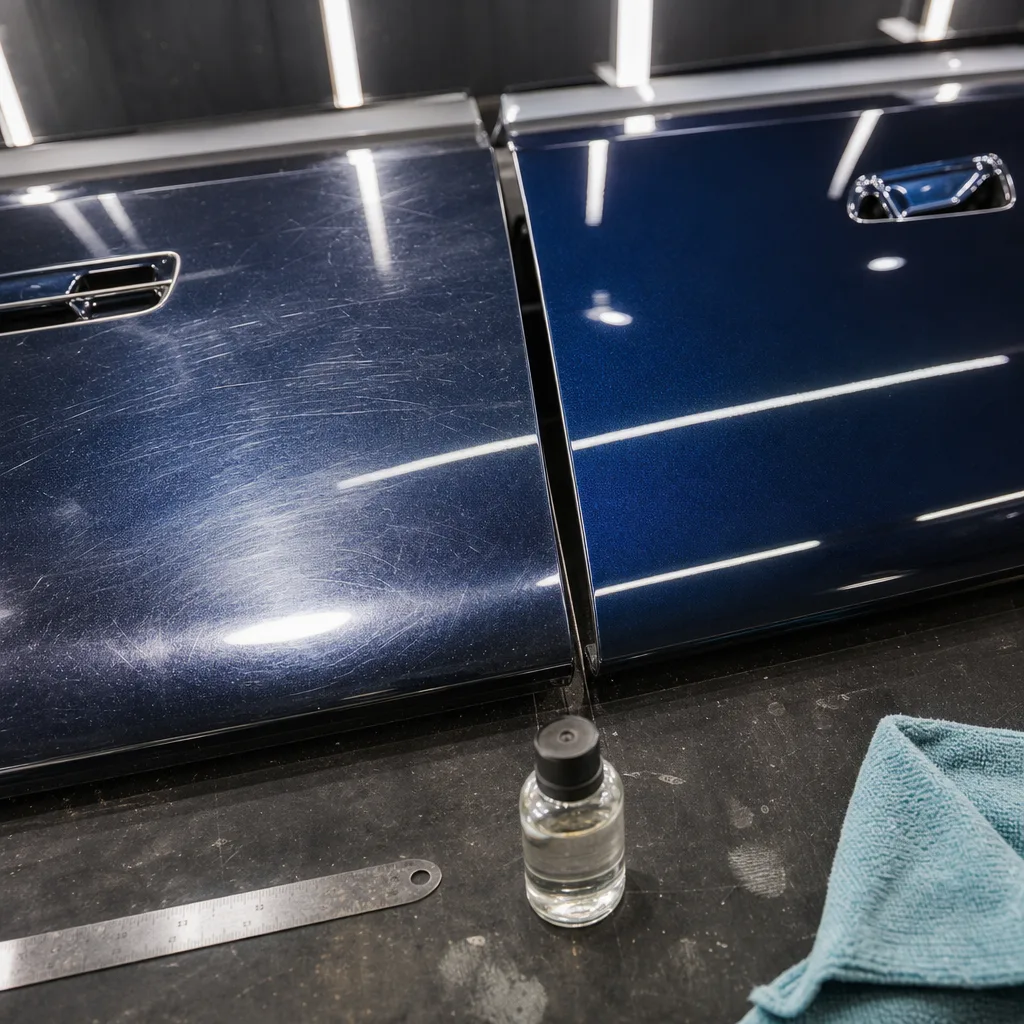
Here's the part most people skip past. A ceramic coating doesn't hide anything. It locks in whatever's underneath it. So if your clear coat is full of swirl marks, water spots, and road grime from a Michigan winter, that's exactly what gets sealed in. Glossy, yes. But glossy swirls.
We see this mistake all the time. Someone gets a coating applied over unprepped paint, and six months later they're frustrated. The shine looks great in the shop, where the lights hide the defects. Then daylight tells the truth.
Paint prep is the real work.
For a lot vehicles we've seen in Fraser, the paint needs decontamination before anything else. Salt, brake dust, and tar bond into the clear coat over a season of driving on Groesbeck or 15 Mile. A clay bar treatment pulls that out. Then we look at what's left, and that's where the real variation shows up between one car and the next.
Two cars, same year, same color. One's been hand washed and garage kept. The other lived outside through three winters and went through automatic car washes. Those two vehicles need completely different amounts of paint correction before a coating makes sense. That's the honest reason prep drives so much of the difference in what a full job involves.
Things we're looking for when we inspect paint:
- Swirl marks and wash scratches, usually from brushes or dirty towels
- Etched water spots, which are common after a wet spring followed by sun
- Oxidation and dullness, most noticeable on older reds and blacks
- Bonded contamination you can feel with your fingertips through a plastic bag
- Deeper scratches that catch a fingernail and won't polish out safely
Not every defect needs to come out. Part of our job is telling you which ones are worth chasing and which ones aren't. Removing clear coat is permanent, so we're conservative about it. A car with 90 percent of its defects gone looks incredible, and the paint stays healthy for years.
How a proper prep sequence usually runs:
- Full wash and wheel cleaning, including door jambs and panel gaps
- Chemical decontamination to dissolve iron and tar deposits
- Clay bar treatment to lift what chemicals leave behind
- Paint inspection under dedicated lighting to map the defects
- Paint correction, either a single polishing stage or multiple, based on what we find
- Panel wipe to strip any polishing oils so the coating can bond
- Coating application, panel by panel, in a controlled environment
Notice that the coating shows up at step seven. Everything before it is the reason the coating performs. And it's why a rushed job and a careful one can look similar on day one, then diverge fast.
Why does this matter so much around here? Because our winters are brutal on paint. Salt brine sits on horizontal panels for weeks. A properly prepped and coated hood sheds that stuff with a rinse. An unprepped one holds it in the scratches.
When we talk with customers about ceramic coating in Fraser, we always start with the paint inspection, because that conversation shapes everything that follows. No two quotes should look the same if the cars don't.
Professional Ceramic Coating vs. DIY: What's Really Different
Walk into any auto parts store off Groesbeck and you'll find a shelf of coating bottles promising years of gloss. We get asked about them constantly. The honest answer is that the liquid in the bottle isn't the main difference. The difference is everything that happens before the liquid ever touches your paint.
Ceramic coating bonds to whatever surface it lands on. If your clear coat has swirl marks, light scratches, or bonded fallout from a Michigan winter, the coating locks all of that in. Permanently. That's the part most DIY guides gloss over.
Here's what a professional job involves before any coating gets applied:
- A full decontamination wash to strip road film, salt residue, and old wax.
- Clay bar treatment to pull out embedded brake dust and rail dust you can feel but can't see.
- Paint inspection under dedicated lighting to map swirls, scratches, and thin spots.
- Paint correction with machine polishing to level defects instead of hiding them.
- A panel wipe to remove every trace of polishing oil so the coating can bond bare.
- Controlled application panel by panel, with each section leveled before it flashes.
- A cure period in a dust-free, climate-stable bay before the car sees weather.
That's usually multiple days of work. A driveway job in Fraser skips most of it, not because people are lazy, but because the tools and the space aren't there.
And the environment matters more than folks expect. Coating cures based on temperature and humidity. Apply it in a 90 degree July driveway and it flashes before you can level it, leaving high spots and streaks. Try it in a cold garage in February and it may never cure properly at all¹. Have a look around at different forums online, and you may see complaints from car owners who did everything right except the weather.
We do every job in our enclosed and climate-controlled shop in Fraser, not a rushed overnight in the driveway. This way the coating we install on your car can sit and cure for as long as it needs.
What else do you get from the professional route?
- Corrected paint underneath, so the gloss is real depth instead of a shiny film over damage.
- Even thickness across every panel, including door jambs, mirrors, and trim edges.
- Coating products that need professional handling and don't come in consumer bottles.
- A finish that holds up through road salt season instead of fading by spring.
Is a DIY kit worthless? Not at all. On a newer car with clean paint, a bottle kit adds slickness and makes washing easier for a season or so. Think of it as a better wax, and it does that job fine.
Coating also isn't the automatic answer for every car or every budget. It's fair to weigh the downsides of ceramic coating against what you're getting before you spend a dollar.
But if you're protecting something you care about, the prep is the product. The coating is just the last step.
Frequently Asked Questions
How do I know if my car needs paint correction before coating?
You'll know by running your fingertips over the paint through a plastic bag and checking under bright light for swirl marks or haze. If you feel rough spots or see spider-web scratches in the sun, correction is needed. Cars that sat outside through a Michigan winter almost always need it, since road salt and slush leave etching you can't see in the driveway. A shop inspection under dedicated lighting gives you the real answer before any coating goes on.
Can I apply ceramic coating myself instead of having a shop do it?
You can buy consumer ceramic products, but they don't replace the prep and correction work a shop does. Coating locks in whatever is already on your paint, so skipping decontamination and polishing means sealing in swirls and water spots for years. A shop also applies in a controlled environment, which affects how well the coating cures and bonds. If you want lasting results, it helps to understand what goes into a proper job before deciding.
Why does my car need more correction after a Michigan winter than in summer?
Winter driving in Fraser and around Macomb County covers your paint in salt brine, slush, and road grime that etches the clear coat over months. Salt sits on hoods and trunks for weeks, and repeated exposure eats into the finish even if you can't see damage right away. A car brought in during spring often needs real correction, while the same car brought in before winter usually needs far less work.
Does the color of my car affect how much prep work it needs?
Yes, darker colors like black and dark blue show swirl marks and haze much more clearly under inspection lighting than lighter colors like silver. This means a black car often needs more polishing passes to reach the same finished look. It's not that dark paint is more fragile, it's that every imperfection is easier to spot. This is one reason two similar cars can need very different amounts of correction time.
What's the difference between a clay bar treatment and paint correction?
Clay bar treatment removes bonded contamination like tar, brake dust, and salt residue sitting on top of your clear coat. Paint correction goes a step further and polishes out swirl marks, etching, and oxidation within the clear coat itself. Clay bar work usually comes first, since it clears surface grime so the shop can see what correction is really needed. Both steps matter, and skipping either one affects how well a coating bonds and lasts.
How do I tell if a ceramic coating quote includes proper prep work?
Ask the shop what steps are included before the coating itself, since prep is where most of the labor hours go. A thorough quote should mention decontamination, clay bar treatment, paint inspection, and correction, not just a quick wash. If two quotes look far apart, the gap almost always comes down to prep depth. Our pricing breakdown for ceramic coating in Fraser walks through each step so you know exactly what you're paying for.