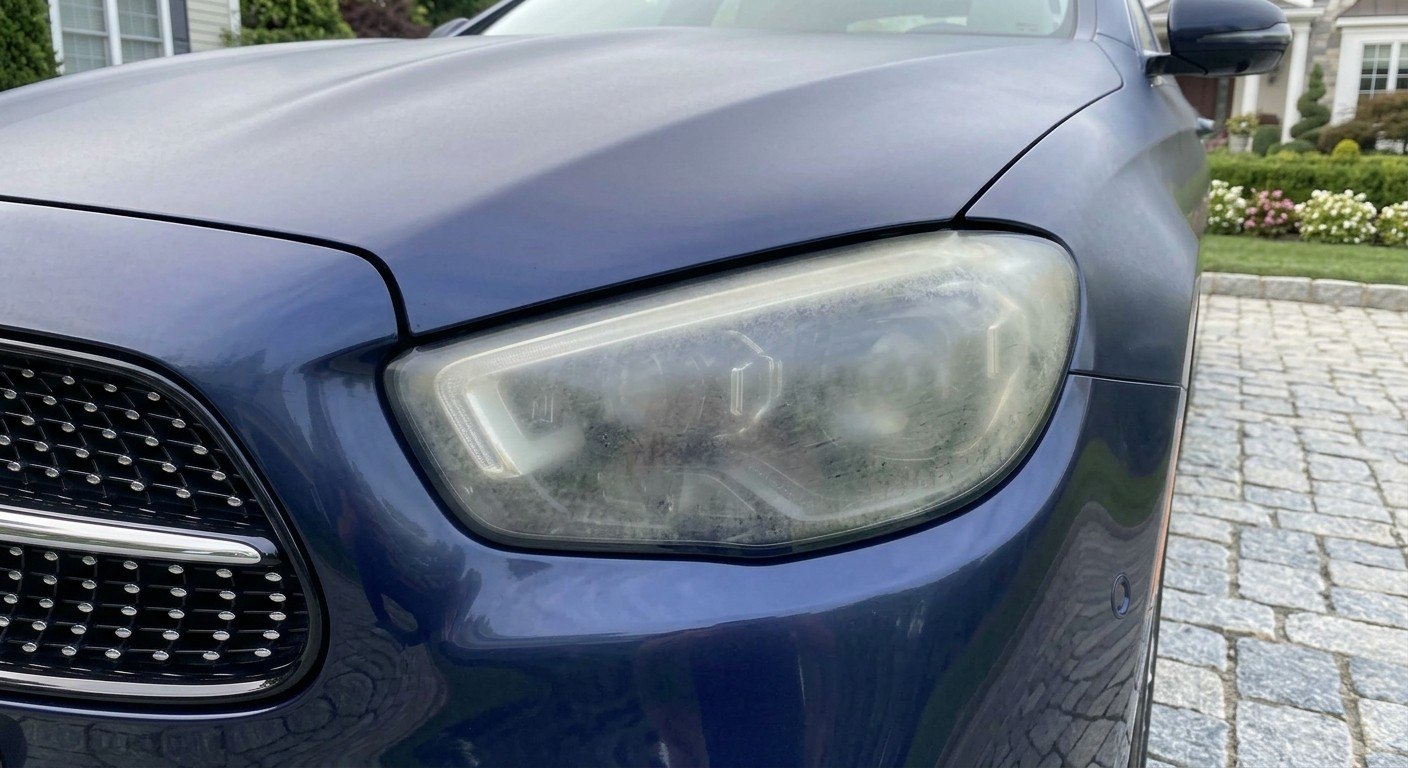
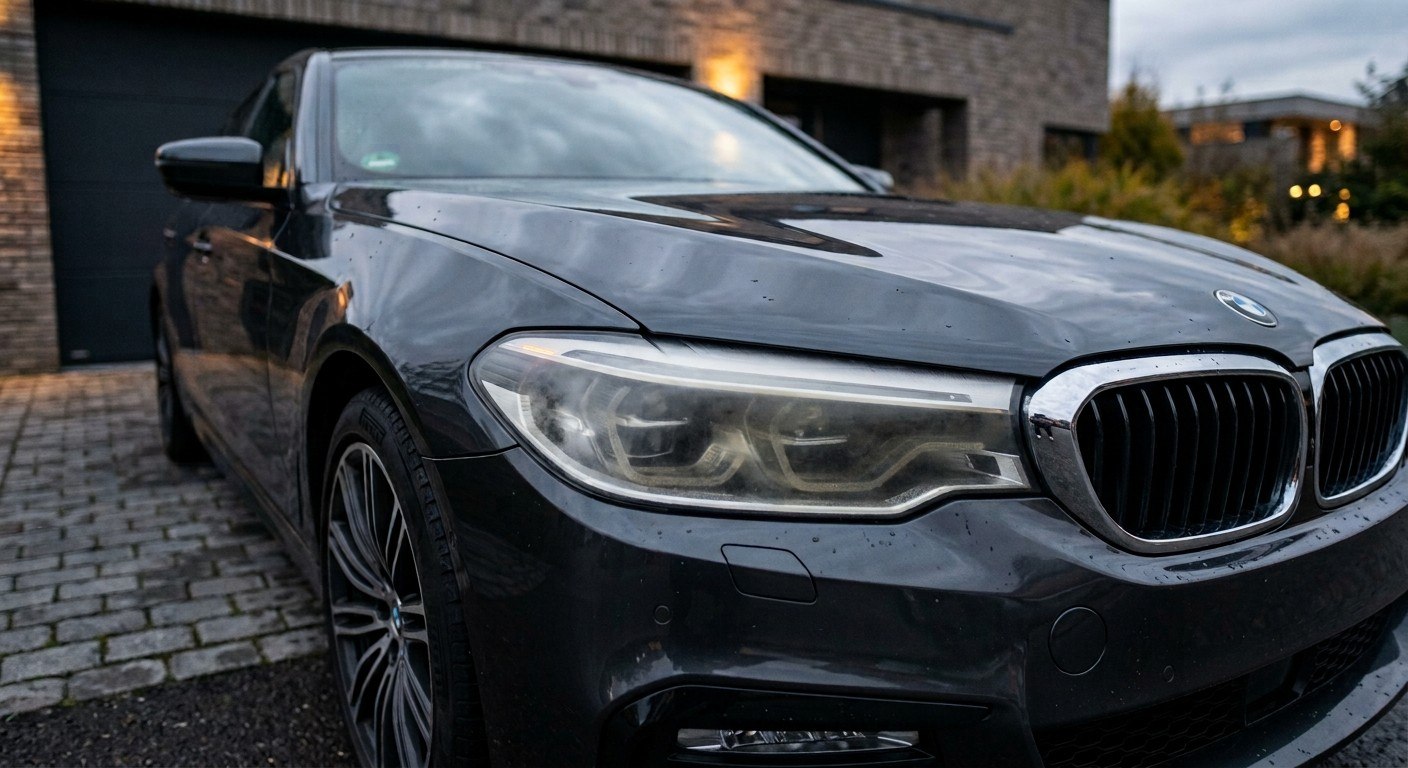
Headlight restoration is the process of clearing up cloudy, yellowed headlight lenses by removing the oxidized outer layer of the plastic and sealing it with a fresh protective coating.
It fixes surface haze from UV and age, restoring clarity and brighter light output, without replacing the whole headlight. It only works on surface oxidation, though, not on cracked lenses or moisture trapped inside the housing.
One important detail to understand why this happens, is that modern headlights aren't glass anymore, they're polycarbonate plastic¹. It's tougher and lighter than glass, but sun exposure breaks it down over time. The factory adds a clear protective coating to guard against UV, but that coating wears out eventually, no matter how well you care for the car.
Once that coating is gone, the plastic underneath oxidizes, which is what turns lenses yellow, cloudy, or foggy. It shows up most on cars parked outside without a garage, especially through Michigan summers when the sun runs longer and stronger. Salt and road grime from winter add a layer of grit that makes it look even worse.
Unfortunately, it's not a case of "dirt on the surface", so washing, wiping, and even glass cleaner won't help, because the damage is baked into the plastic. This is exactly where headlight restoration as a service comes in, because it works where cleaning doesn't, as long as the haze is truly surface oxidation and not something deeper.

That deeper problem is the catch. Restoration fixes the plastic lens, not what's behind it. A cracked housing, moisture pooled inside the lens, or a peeling reflector coating is a seal or hardware issue, and polishing won't reach any of it.
The quick test is your beam at night. Yellow or hazy but still bright usually means surface oxidation, which restoration handles well. Dim, scattered, or foggy from the inside points to moisture or a failing reflector instead.
We'll tell you straight if a lens needs replacing instead.

Here's the thing about drugstore headlight kits. They work, kind of, for about a month. You sand the plastic, it looks clear, you feel good about it. Then winter hits, the salt trucks come out on Utica Road and Fourteen Mile, and the hazy yellow film creeps right back. The pattern is common: a kit that looked great in July is cloudy again by January.
The reason is simple. Sanding doesn't protect anything, it just removes the damaged layer that was already there. Headlight plastic is polycarbonate, and once you strip it bare, it's wide open to UV and road grime again. Without a sealant on top, you've restarted the clock on the same problem.
That's what a proper restoration gets right that a kit skips. We sand out the oxidation in stages, then finish with a UV-resistant coating that bonds to the plastic. It's the difference between painting over rust and treating it first. We can also add ceramic coating on top, which adds a tougher, water-shedding layer to help the clarity last.
The headlights that come back cloudy within months are almost always the ones that got sanded but never sealed. A kit with no real sealant just can't hold up to Michigan summers and salted winters back to back.

We check the lens first. Deep pitting or cracks change the plan, and we'll tell you upfront if restoration will hold or if you'd be wasting money.
We tape off the surrounding paint and trim, since sanding gets messy fast without it.
We wet-sand through a series of grits, starting rough to knock down the oxidation, then finer to smooth it out.
We polish the lens back to clarity and gloss. This is where it starts looking new again.
We finish with a UV-resistant coating that bonds to the plastic. Skip this and you're back to cloudy within a year.
So how much does this cost? Fair question, and the honest answer is that it depends on what we find once we see your headlights. Pricing here isn't one-size-fits-all, and any shop quoting blind over the phone may be guessing.
A few things move it. The biggest is how deep the oxidation goes: a hazy top layer sands out quickly, while UV damage baked in deep after years of Michigan sun takes more passes and more time. Things like cracks, pitting, or road-debris damage on top of oxidation add to it, as does the number of headlights in one visit.
One thing worth asking any shop before you book: are they sanding and polishing only, or sealing the lens afterward too? A restoration without a proper seal starts hazing again fast, sometimes within months, once winter salt and summer UV both get a shot at it. That one answer tells you whether you're getting a real fix or a temporary shine.
Check the light output at night first. If your lenses look yellow or hazy but still throw a decent beam, that's surface oxidation, and restoration handles it well. If the light looks dim, scattered, or foggy from inside even after wiping the lens clean, that usually means moisture or a failing reflector behind the plastic. We inspect every lens before we start, so you're not paying for a fix that won't solve the problem.
Not if they're sealed properly. The haze comes back fast on cars that only got sanded, because bare plastic has zero protection against salt trucks and road grime on routes like Utica Road and Fourteen Mile. We finish every job with a UV-resistant coating that bonds to the plastic, so your headlights stay clear through the winter instead of clouding up again by January.
Washing your car won't stop the yellowing, because it's not dirt sitting on the surface. UV rays break down the clear protective coating on the plastic lens over time, and once that coating wears out, the plastic underneath oxidizes. Cars parked outside without garage coverage see this faster, especially through long, strong Michigan summers. It's baked into the plastic, so cleaning products can't touch it.
A drugstore kit can make lenses look clear for about a month, but it rarely lasts. Sanding alone strips the damaged layer without protecting what's underneath, so the plastic faces UV and road salt all over again. That's why kit results that look great in July are often cloudy again by January: the lens was never sealed.
It depends on how deep the oxidation goes and how long you'll keep driving the car. Restoration works well for surface haze and yellowing, and it's a fast way to improve how the car looks and how well your headlights light up the road. If the housing is cracked or there's water inside the lens, we'll tell you if restoration will hold up or not.