


What this Corvette's owner wanted
Keep the car looking new, without changing how it looks. The goal was coverage on the panels that take the most abuse, while leaving the factory finish showing through clean.
Why front-half coverage fits a Corvette on Macomb County roads
A Corvette doesn't get driven like a commuter car, but around here it still has to live on the same salted, chipped-up pavement as everything else. Run east to west on Kelly Road or open it up along the Utica Road corridor and the front end takes a beating: loose stone, sand left over from winter treatment, whatever the truck ahead of you kicks up.
That's why the front half and doors is such a common map on cars like this. It's the exact zone that catches the damage, protected, without wrapping panels that rarely see a rock.
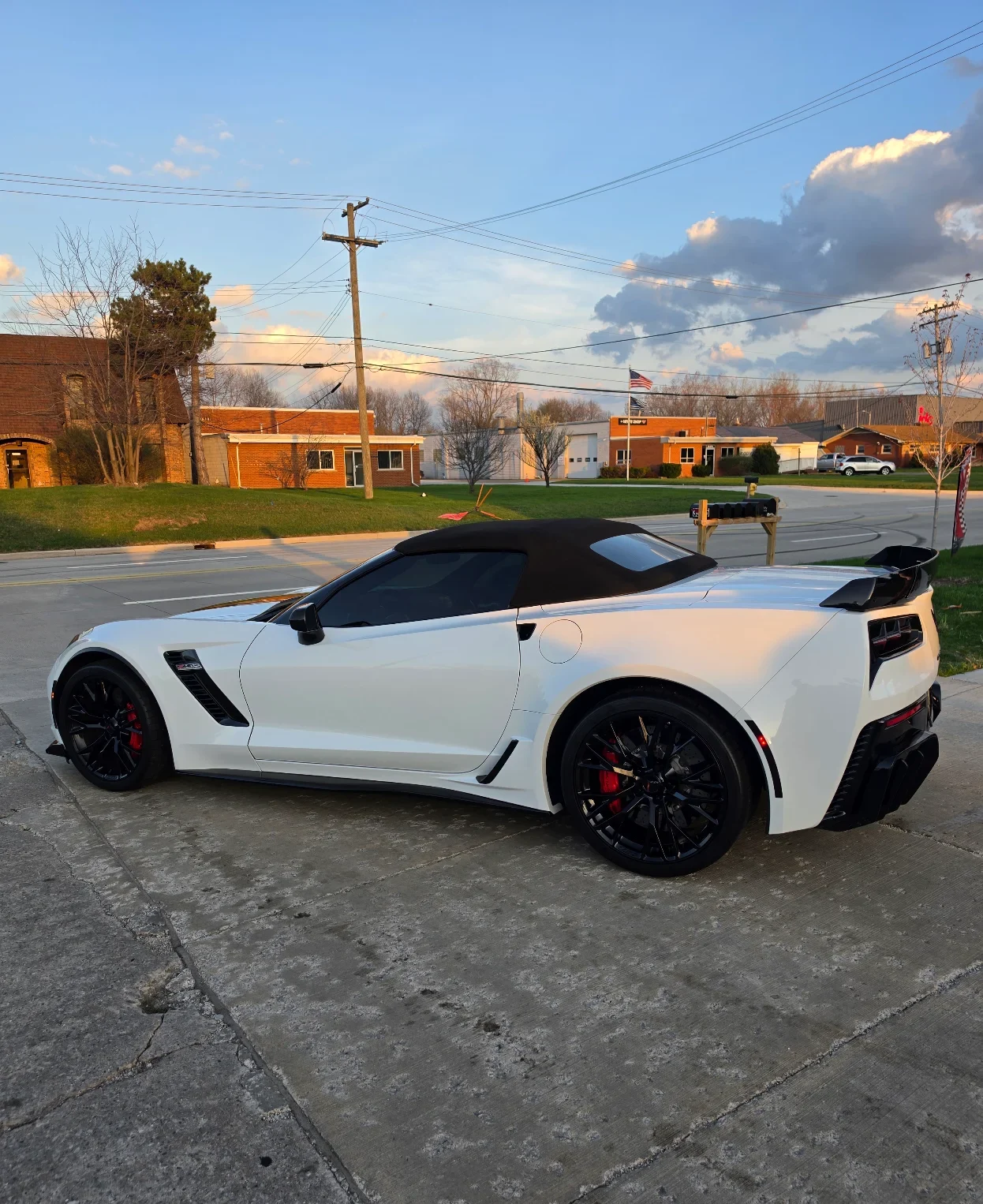
Our process on this C7, step by step
Every car is different, and a Corvette is a good example of why a partial front install is more involved than it looks. Those aggressive body lines that make a C7 look fast are the same ones that make film work slow and precise. Here's how this white Corvette went from bare paint to protected.
Walk-around and coverage map
We started outside the Fraser shop with the owner, going panel by panel to note any existing chips or swirls and mark where coverage would start and stop. On a front-half-plus-doors job, the cut lines matter. We plan them to fall along natural body creases so the film's edge disappears instead of catching the eye mid-panel.
Deep wash and decontamination
Foam pre-soak, two-bucket hand wash, iron remover, and a clay bar treatment, then a forced-air dry. On a low car like a Corvette, the front splitter and lower fascia collect the most road grime and tar, so this stage takes extra attention down low. Anything left on the surface gets sealed under the film forever.
Paint correction and panel prep
A light-to-moderate correction pass to knock down swirls and lift clarity, then an IPA wipe-down so nothing sits between paint and film. Trim and sensitive edges get masked, and we blow the panel gaps out with air. Prep is where a clean install is actually won.
Film application, where the curves are the challenge
This is where a Corvette earns its reputation. We used software-cut GSWF patterns applied with slip solution, aligned to each body line and squeegeed from the center out. The tough zones on this car:
- The curved front bumper and splitter: tight compound curves that need heat and patience to conform without lifting.
- The fender vents and flared arches: sharp transitions where the film has to stretch and tuck cleanly.
- The hood: a big, high-impact panel that catches everything on the highway, so edges get wrapped and locked, not just laid flat.
- The doors: handled as their own panels, with edges sealed around the handles and mirrors so daily use doesn't work them loose.
Heat-set, reassemble, and final inspection
Edges and high-stretch areas were heat-set to lock them down, trim reinstalled, and the whole front end inspected under light for bubbles, lift lines, or trapped contamination. Then the car cured overnight inside the shop before it went back to the owner.
How this C7 turned out
Front half and doors fully protected, cut lines tucked into the body creases so the film is nearly invisible.
And the part the owner noticed first: a little extra depth and shine across the paint. Every high-impact panel a Michigan road can hit is now taking the abuse instead of the factory finish.
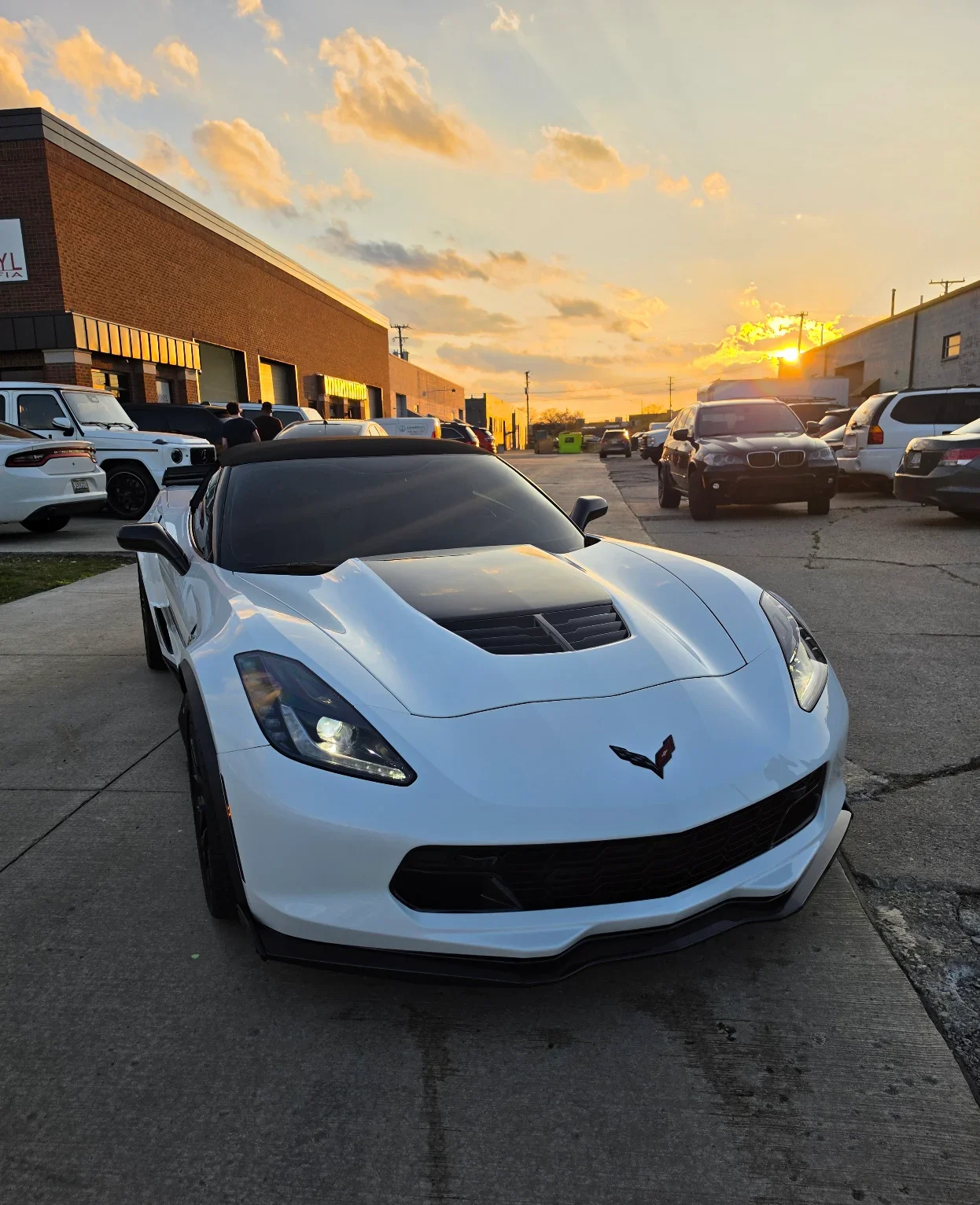
Built for Michigan winters, not just show
The shine is the part people notice first. The part that matters six months in is how the film handles a Fraser winter. Road salt is relentless from December through March, and it's rough on both paint and film edges. GSWF holds up because it stays optically clear, with no yellowing and no cloudy edges, and the edges stay tucked and sealed so salt spray can't work its way underneath.
Keeping it sharp is simple: a touchless or gentle hand wash through the season, rinse the salt off regularly, and skip the stiff brushes that catch film edges. Do that and a car like this Corvette looks just as clean next spring as it did the day it left our shop on Kelly Road.
In the owner's words
"I had clear ceramic wrap put on the front half and doors of my Corvette, to help prevent rock chips and scratches. It also provides a nice shine to the paint. Dean and crew did a great job. Car looks brand new."
One more reason Corvette owners go partial first
Full body PPF is the move for a brand-new car you plan to keep forever. But for a lot of owners, front-half plus doors is the sweet spot: it shields every panel that actually gets hit on Michigan roads, keeps the cost reasonable, and still leaves the factory finish showing through clean. Come by the Fraser shop and we'll walk your car with you, look at how and where you drive, and help you land on the right coverage, with no pressure and no overselling.