Can You See Through Home Window Tint at Night? (And How to Keep Your Privacy)
It’s 7 p.m. in Fraser. The lights are on, dinner’s on the stove, and the street outside is dark. You glance at your tinted front window and wonder if the neighbors can see right in.
At noon, that same home window tint looked like a mirror from the street. So what changes after dark, and what can you do about it?
This guide gives you a plain answer and the fixes that work at night. We’ll cover why it happens and when film turns see-through. Then the best night-privacy films, quick fixes, and a room-by-room guide.
Can You See Through Home Window Tint at Night?
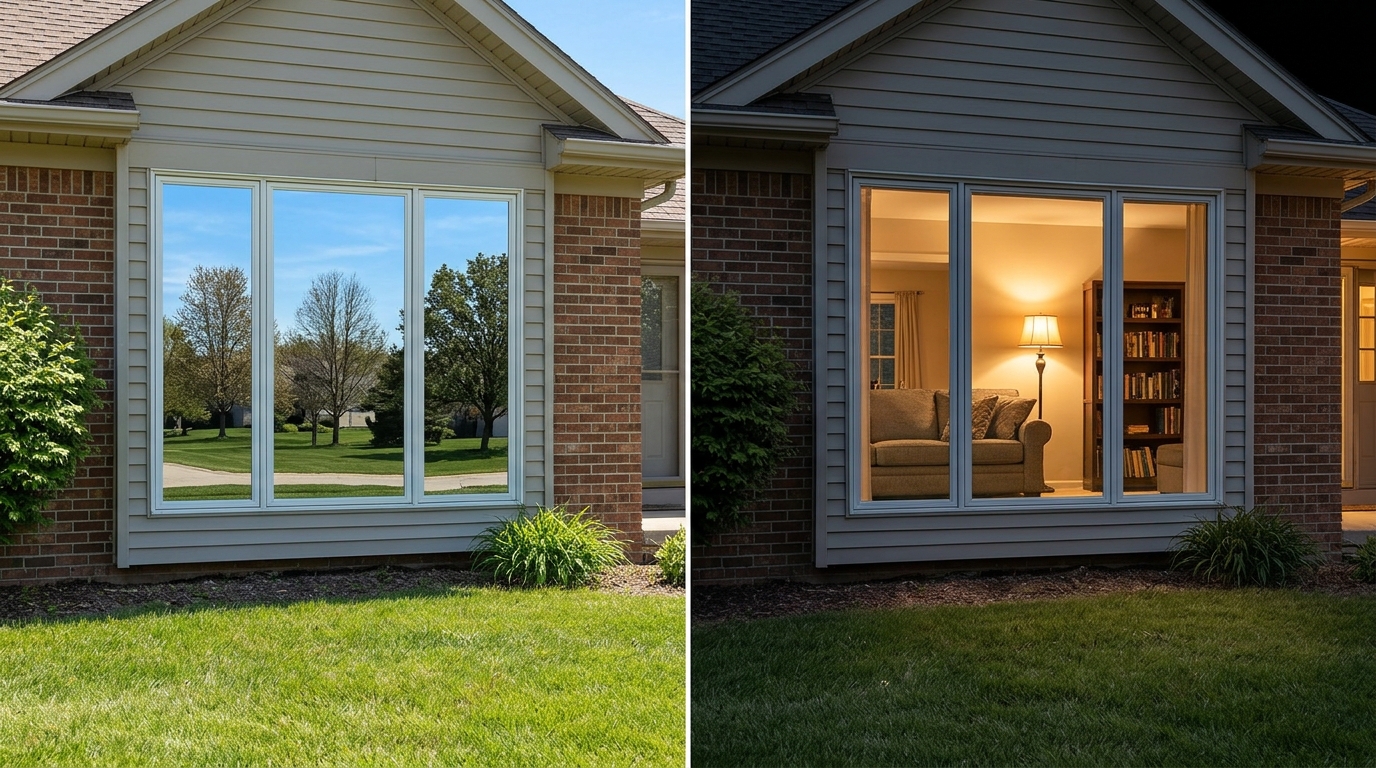
Yes, often. Mirrored or dual-reflective tint only hides your home when it’s brighter outside than inside. At night, with your lights on, people outside can see in. A darker reflective film doesn’t change that.
For privacy after dark, you have three good options:
- Frosted or decorative film, which gives privacy day and night
- Blackout film, which blocks both the view and the light
- Reflective film paired with blinds or curtains for the evening
Not sure which option fits your home? Check out our home window tinting in Fraser page.
Why Mirrored Window Tint Works in the Day but Not at Night
Reflective film does two things at once. It bounces some light back, and it lets some light through.
Whichever side is brighter sees a mirror, because the bounced light drowns out what’s behind the glass. The darker side sees through, because light from the bright side passes straight to them.
During the day, the sun makes the outside the bright side. People on the street see a mirror, and you see out. At night, your lamps make the inside the bright side, and the whole thing flips.
When Can You See Through Mirrored Window Film?
Here’s how it plays out at different times of day:
- Daytime, lights off inside: Strong privacy. People outside mostly see a mirror.
- Daytime, lights on inside: Still good privacy, since the sun is usually much brighter than your lamps.
- Dusk: Privacy fades as the light outside drops. Once your lights come on, people can start to see in.
- Night, lights on inside: Little to no privacy. People outside can see in clearly.
- Night, lights off inside: Both sides are dark, so neither side sees much.
Here’s an easy test. If you look out at night and mostly see your own reflection, people outside can see you.
Best Window Film for Night Privacy
Not every privacy film behaves the same way after dark. Here’s how the main types compare:
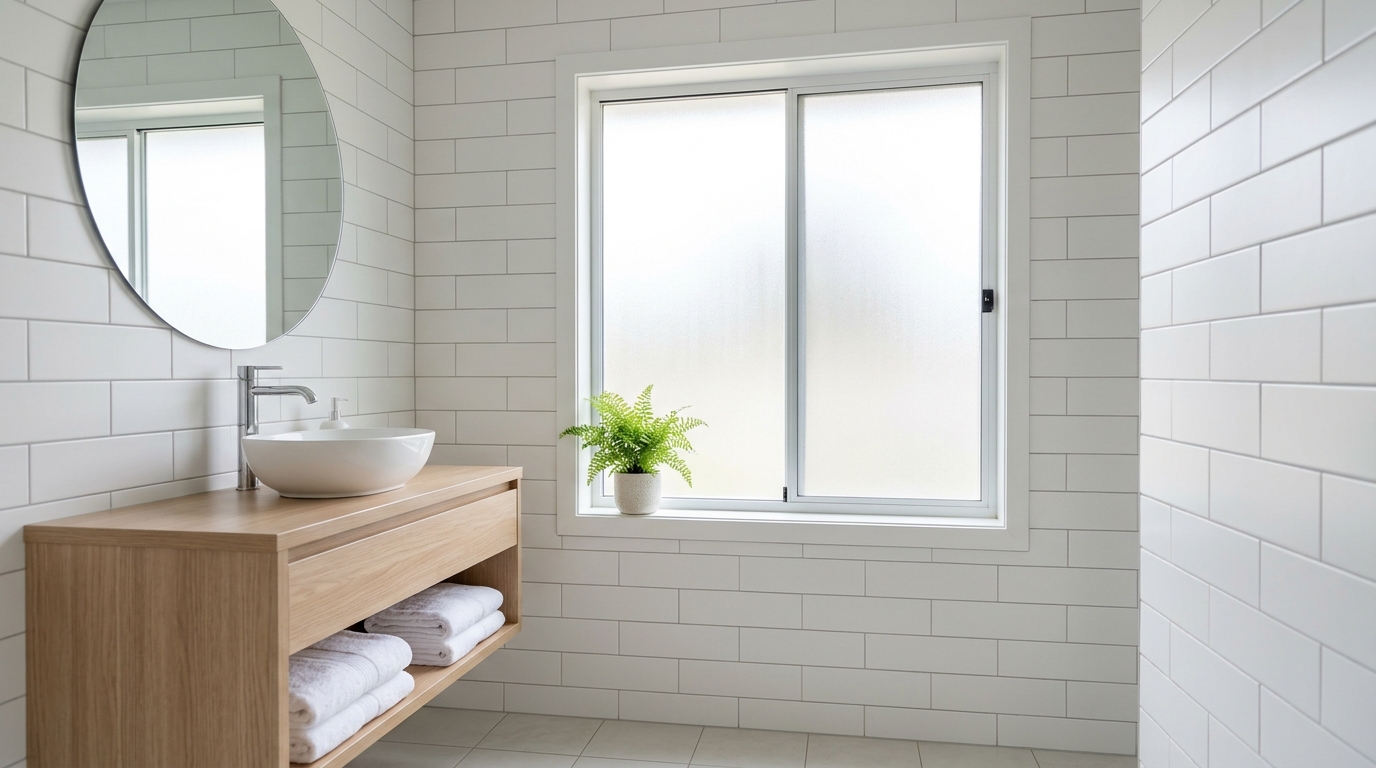
- Frosted film. Blurs the view both ways and still lets daylight in. Day privacy: yes. Night privacy: yes.
- Decorative film. Privacy with a pattern or design, so it doubles as a style choice. Day privacy: yes. Night privacy: yes, depending on how solid the pattern is.
- Blackout film. Blocks the view and the light completely. Day privacy: yes. Night privacy: yes. The trade-off is no daylight at all.
- Dual-reflective film. Strong daytime privacy with a clear view out. At night with your lights on, it follows the same light rule as any mirrored film.
- Sun-control film. Built for heat, glare, and UV, not privacy. If seeing in is your worry, it’s the wrong tool.
Want privacy day and night? See our frosted window film installation service page.
Simple Ways to Keep Privacy at Night With Tinted Windows
Already have reflective tint? You don’t have to replace it. A few simple habits close the gap after dark.
- Add blinds or curtains for the evening. Leave them open by day for the view, and close them when the lights go on.
- Frost the lower half. Frosted film on the bottom half blocks the view from the street. The top stays clear for daylight and sky.
- Dim the lights near street-facing windows. The smaller the gap between inside and outside light, the less people can see. Lamps set back from the glass help too.
This matters more in winter. In Fraser, it’s dark by around 5 p.m. in December. That’s a lot more hours when your lights are the brightest thing on the street.
How to Choose Privacy Window Film for Each Room
Every room has a different job, so the right film changes from room to room:
- Bathrooms: Frosted or decorative film. You get privacy around the clock without losing daylight.
- Bedrooms: Frosted film, or blackout film with curtains if you want the room fully dark.
- Street-facing living rooms: Dual-reflective film for daytime privacy, paired with one of the night fixes above.
- Front doors and sidelights: Decorative film, so visitors can’t see in but the entry still gets light.
Planning reflective film? Check your HOA rules first, since some may limit mirrored finishes.
When we visit a home, the Vinyl Mafia team walk the rooms with you. We look at which way each window faces, which rooms bother you, and how much privacy you need, and when. Then the film gets matched room by room.
Talk it through with a local installer. Call Vinyl Mafia at (586) 337-7021 or get a free quote.